Overview
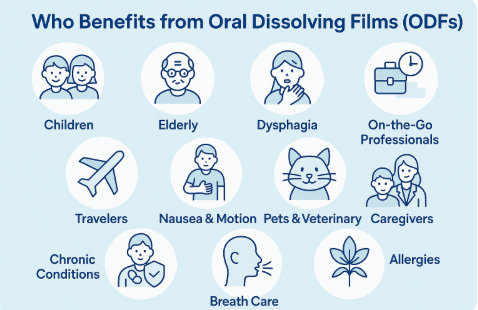
Oral dissolving films (ODFs) melt in seconds without water. They are discreet, portable, and unit-dosed (one strip = one dose)—ideal when swallowing is difficult or visible dosing is inconvenient (e.g., vitamins, melatonin, caffeine, breath-freshening formulas).
People with Swallowing Difficulties
Children, seniors, post-operative patients, and orthodontic wearers often resist tablets/capsules. ODFs melt on the tongue and reduce effort, improving adherence and dose accuracy while lowering aspiration discomfort.
Busy, Traveling, or Shift-Work Users
For commuting, meetings, classrooms, flights, and night shifts, ODFs enable on-demand, discreet intake (e.g., melatonin, B-complex, caffeine) to help maintain routines and speed recovery across time zones.
Users Needing Precise, Trackable Doses
In nutrition support or functional supplementation, unit dosing makes tracking and adherence easier. For micro-dosing or split dosing, single-strip control is convenient and consistent.
Oral-Care & Social Settings
When fresh breath or local oral benefits are desired at work or social events, brief intraoral residence and fast melt minimize visibility and social friction.
Athletes & Outdoor Enthusiasts
Hiking, cycling, camping, and marathon aid stations benefit from ultralight, quick-access dosing that doesn’t interrupt cadence.
Boundary Notes (Informational)
ODFs work best for low–to–moderate doses and actives amenable to taste masking. Pregnant/lactating users, minors, and those with chronic conditions should follow labeling and medical advice. Discontinue and consult a professional if allergies or discomfort occur.